Dental implants are widely considered one of the most reliable and long-lasting ways to replace missing teeth.
But one of the most common questions patients ask before treatment is:
“How long do dental implants actually last?”
It’s an important question. When you invest in replacing a tooth, you want to know that the result will be stable, functional, and durable for many years.
The good news is that dental implants have been extensively studied and have strong long-term clinical evidence supporting their reliability. With good care and appropriate treatment planning, they can remain functional for many years.
If you’re still exploring your options, you can also learn more about dental implants and how they replace missing teeth.
💡 Quick answer: Dental implants are designed to be a long-term solution for missing teeth. Many implants function successfully for 20 years or more, and some remain stable for several decades when properly maintained. However, longevity depends on several factors including oral hygiene, gum health, general health, and regular dental maintenance.
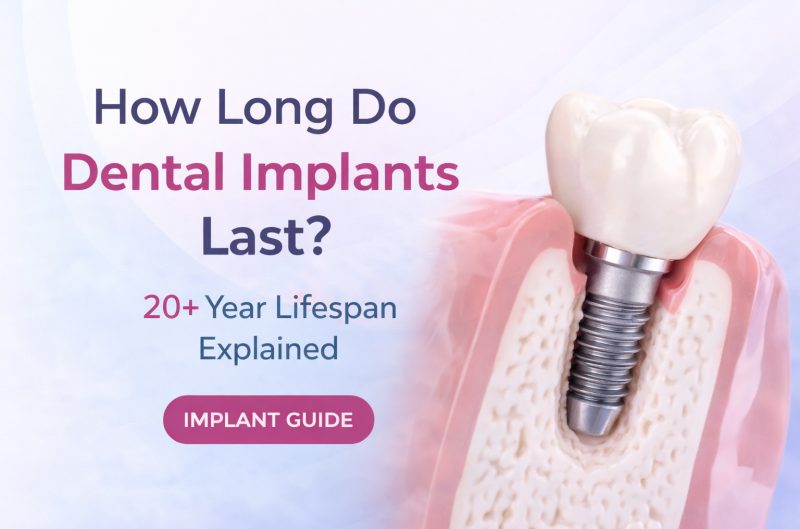
Dental implants consist of two main components:
These components may have different expected lifespans.
The titanium implant integrates with the jawbone through a biological process called osseointegration.
Once healing is complete, the implant becomes firmly anchored in the bone. In many patients, the implant itself can function successfully for 20 years or longer.
The visible tooth attached to the implant may experience normal wear over time.
Depending on materials and individual factors such as bite forces, restorations may need replacing after around 10–15 years.
Importantly, replacing the crown does not mean the implant has failed. In most cases the implant itself remains healthy and stable.
Dental implants have several characteristics that contribute to their durability.
Unlike dentures or bridges, implants fuse with the jawbone. This creates a stable foundation similar to a natural tooth root.
Modern implants are typically made from medical-grade titanium, a material widely used in medicine due to its strength and compatibility with bone.
Many implant systems used today, including those commonly used in specialist clinics, are supported by extensive long-term clinical research.
Modern implant treatment uses 3D scans and digital planning, allowing clinicians to position implants accurately and safely for long-term stability.
For a broader overview of treatment, visit our Dental Implants page.
Although implants are designed to last many years, several factors influence their longevity.
Good daily cleaning is essential.
Implants require the same level of care as natural teeth, including:
Poor oral hygiene can lead to peri-implantitis, an inflammatory condition affecting the tissues around implants.
Healthy gums help support implant stability.
Patients who have previously experienced gum disease can often still receive implants, but careful monitoring and maintenance are important.
Smoking is known to affect healing and may increase the risk of complications around implants.
Reducing or stopping smoking can improve long-term implant health.
Heavy biting forces or teeth grinding (bruxism) can place additional stress on implant restorations.
In some cases, dentists may recommend a protective night guard to reduce pressure on implants and surrounding teeth.
Routine dental visits allow clinicians to monitor the health of the implant and surrounding tissues.
These appointments help identify any early issues before they become more serious.
Dental implants have high success rates in modern dentistry. Many long-term studies report success rates above 90–95% in appropriate cases.
However, no medical or dental treatment can be guaranteed to last forever.
Implant complications can occur in a small number of cases, often due to factors such as:
Careful assessment and maintenance help minimise these risks.
Patients also often ask whether implants are available through public dental services. You can read more in our guide to dental implants on the NHS.
Patients play an important role in maintaining the long-term health of their implants.
Simple habits can make a significant difference.
Brush your teeth twice daily and clean between teeth carefully.
Your dentist and hygienist can monitor implant health and remove plaque build-up.
Smoking may affect healing and increase the risk of complications.
A night guard may help protect both implants and natural teeth from excessive forces.
✅ Tip: Long-term implant success depends on both good treatment planning and good maintenance. Looking after your implants well after treatment is one of the most important ways to protect your investment.
Although implants may initially cost more than some other tooth replacement options, many patients consider them a worthwhile long-term investment.
Unlike dentures or bridges, implants:
Because of this, many patients report significant functional and lifestyle benefits after implant treatment.
Can dental implants last a lifetime?
Some implants remain functional for many decades when well maintained. Longevity depends on factors such as oral hygiene, general health, and regular dental care.
How often do implant crowns need replacing?
Implant crowns may need replacement after around 10–15 years, depending on wear and individual circumstances.
What is the success rate of dental implants?
Many clinical studies report success rates above 90–95% in suitable cases, particularly when implants are placed and maintained appropriately.
Are implants stronger than natural teeth?
Implants are very stable and durable. However, like natural teeth, they still require good oral hygiene and regular dental care.
Dental implants are designed to provide a reliable and long-term solution for missing teeth.
While no treatment can be guaranteed to last indefinitely, implants have a strong track record when carefully planned and properly maintained. Many patients enjoy stable, functional results for decades.
If you’re considering dental implants and would like to understand whether they may be suitable for you, speaking with an experienced dental team is the best first step.
Suitability for dental implant treatment varies between patients and requires assessment by a qualified dental professional.
Book a consultation to discuss your options for replacing missing teeth and to find out whether implant treatment may be suitable for you.
Or browse:
Dental implants •
Implants on the NHS

Private dentist in Edwalton near West Bridgford, Nottingham. Dental implants, braces, cosmetic and general care. Book your appointment today.