If you’re considering orthodontic treatment, one of the most common questions people ask is:
“How long will braces take to straighten my teeth?”
Orthodontic treatment can vary in duration depending on the complexity of your case, the type of braces used, and how your teeth respond to treatment.
If you’re still exploring the different treatment options available, you can start with our main orthodontics page, which gives an overview of braces, clear aligners, and other ways to straighten teeth.
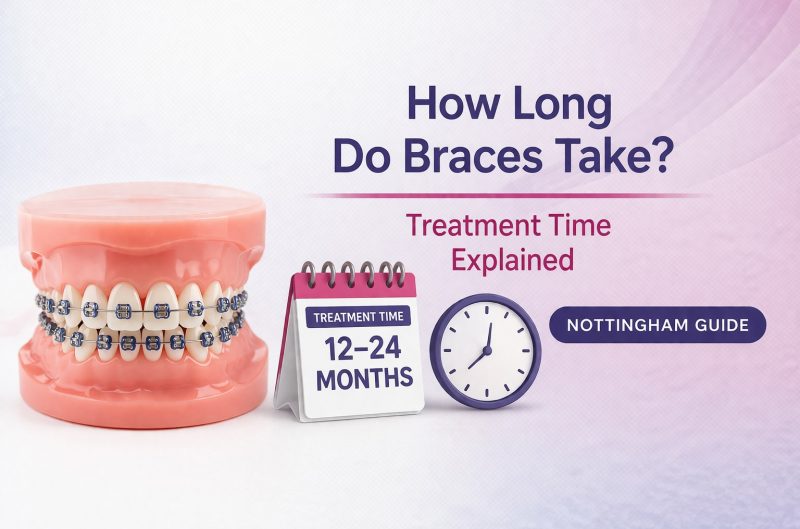
💡 Quick answer: Most orthodontic treatments take between 12 and 24 months, although some cases may be shorter or longer depending on individual factors.
In general, most patients wear braces for:
The exact duration depends on your personalised treatment plan, your bite, and the amount of movement needed to achieve a healthy and stable result.
Patients comparing treatment options often also want to understand the likely cost involved. If that’s something you’re researching, our guide to how much braces cost in Nottingham explains the main factors that influence fees.
More complex cases involving bite correction, crowding, spacing, or significant tooth movement will typically take longer to treat.
Different orthodontic systems may vary slightly in treatment time. For example, some patients compare fixed braces with clear aligners when deciding which treatment may suit them best. You can explore this further in our guide to Invisalign vs braces.
Following your dentist’s instructions is essential. This includes attending appointments and, where relevant, wearing aligners as advised. Missed appointments or not wearing appliances correctly can increase overall treatment time.
Teeth move at different rates in different individuals. Some patients respond more quickly than others, and treatment planning always needs to account for safe, gradual tooth movement.
Some orthodontic systems may appear faster, particularly clear aligners, as they involve fewer visible adjustments and can be easier for some adults to manage day to day.
However, treatment time is primarily determined by the complexity of tooth movement, rather than the appliance used.
If you’re specifically considering aligner treatment, you can read more about your options on our Invisalign page.
Once your braces are removed, you will usually be advised to wear retainers to help maintain the new position of your teeth.
This is an important part of treatment and helps prevent teeth from moving back over time. Although many patients focus on how quickly treatment can be completed, the stability of the final result matters just as much.
That’s one reason why orthodontic treatment should always be planned carefully, rather than rushed.
While many patients prefer shorter treatment times, moving teeth too quickly can affect long-term stability and may not produce the best result.
Orthodontic treatment is carefully planned to move teeth safely and predictably. In many cases, taking the right amount of time leads to a healthier and more stable outcome.
If you’re still deciding between clear aligners and fixed braces, our article on which is better for straightening teeth may help you understand how treatment type can influence the overall experience.
The length of orthodontic treatment varies between patients and depends on factors such as case complexity, treatment type, and individual response.
If you’re considering braces and want to understand what treatment may involve for you, a consultation allows your teeth and bite to be assessed and a personalised plan to be created.
For a broader overview of treatment options, you can also visit our main orthodontics page.
Book a consultation to find out how long orthodontic treatment may take for your specific case and which treatment option may be suitable for you.
Or browse:
Orthodontics •
Invisalign •
Braces costs

Private dentist in Edwalton near West Bridgford, Nottingham. Dental implants, braces, cosmetic and general care. Book your appointment today.