If you’re missing a tooth and researching treatment options, you may wonder:
“Can I get dental implants on the NHS?”
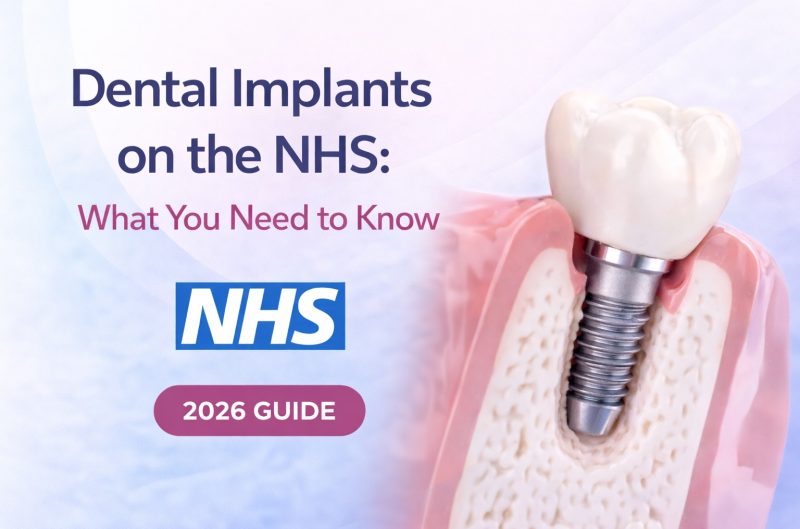
Dental implants are widely recognised as one of the most effective ways to replace missing teeth. However, they are not routinely available through NHS dental services.
In this guide, we’ll explain when implants may be available on the NHS, why they are usually provided privately, and what options patients typically have when considering implant treatment.
💡 Quick answer: Dental implants are rarely available on the NHS. In most cases, implants are only provided through the NHS when there is a specific medical need, such as after major facial trauma or cancer treatment. For the majority of patients seeking tooth replacement, implant treatment is provided privately.
The NHS focuses on providing treatments that are considered clinically necessary to maintain oral health.
When a tooth is lost, there are several ways it can be replaced, including:
Because dentures and bridges can often restore function and appearance, implants are usually considered a more advanced treatment option rather than a basic NHS treatment.
As a result, implants are not routinely funded by the NHS.
For a broader overview of private treatment, visit our Dental Implants page.
Although uncommon, there are situations where dental implants may be provided through hospital-based NHS services.
These cases usually involve significant medical circumstances, such as:
Patients who have lost teeth or jaw structure following serious accidents may be considered for implant reconstruction.
Patients who have undergone surgery to treat mouth cancer may require implants to help restore oral function.
Some people born with conditions that affect tooth development or jaw growth may be considered for implant treatment as part of specialist care.
In rare circumstances, implants may be recommended by hospital specialists when alternative treatments are not suitable.
Even in these situations, patients are usually treated in hospital specialist departments, and the process can involve detailed assessment and waiting lists.
For most people who lose a tooth due to decay, gum disease, or injury, dental implants are provided through private dental clinics.
There are several reasons why patients often choose this route.
Private clinics can provide implant treatment without the eligibility restrictions that apply within NHS services.
Modern implant treatment often involves:
These technologies help clinicians plan implant placement carefully and safely.
Private clinics typically provide detailed consultations, allowing patients to explore treatment options and decide what works best for their needs.
If dental implants are not available through the NHS, other tooth replacement options may still be offered.
These commonly include:
Dentures are removable appliances that replace missing teeth and surrounding tissue.
They can replace a few teeth or a full arch.
A bridge replaces a missing tooth by attaching a replacement tooth to neighbouring teeth.
While bridges can restore appearance and function, they usually require preparation of adjacent teeth.
Each option has advantages and considerations, and your dentist can help explain which treatments may be suitable for you.
For many patients, implants offer benefits that differ from other tooth replacement options.
However, suitability for implant treatment varies between patients and requires a clinical assessment.
Your dentist will consider factors such as bone levels, gum health, and general oral health when recommending treatment.
You may also find it helpful to read more about how long dental implants last once placed.
✅ Tip: If you are considering implants, the most useful first step is usually a consultation with a clinician experienced in implant dentistry. This allows your oral health, bone support, and treatment goals to be assessed properly.
Can I request dental implants on the NHS?
You can discuss this with your NHS dentist, but implants are rarely available unless there is a specific medical indication.
How do I know if I qualify for NHS implants?
Eligibility is usually determined by hospital specialists and often relates to medical conditions such as trauma or cancer treatment.
Why are dental implants usually private treatment?
Implants are considered a more advanced treatment and are not generally included in standard NHS dental care.
What should I do if I’m considering dental implants?
The first step is usually a consultation with a dentist experienced in implant treatment. They can assess your oral health and explain your options.
Dental implants are rarely available through NHS dentistry, as the NHS generally prioritises treatments considered essential for maintaining oral health.
However, implants remain an important option for replacing missing teeth and restoring function.
If you’re considering dental implants, speaking with a qualified dental professional can help you understand the available treatment options and determine what may be suitable for your individual situation.
Every patient’s needs are different, and a personalised consultation is the best way to explore the possibilities for restoring your smile.
Book a consultation to discuss your options for replacing missing teeth and to find out whether dental implants may be suitable for you.
Or browse: Dental implants • Contact us

Private dentist in Edwalton near West Bridgford, Nottingham. Dental implants, braces, cosmetic and general care. Book your appointment today.